Overview
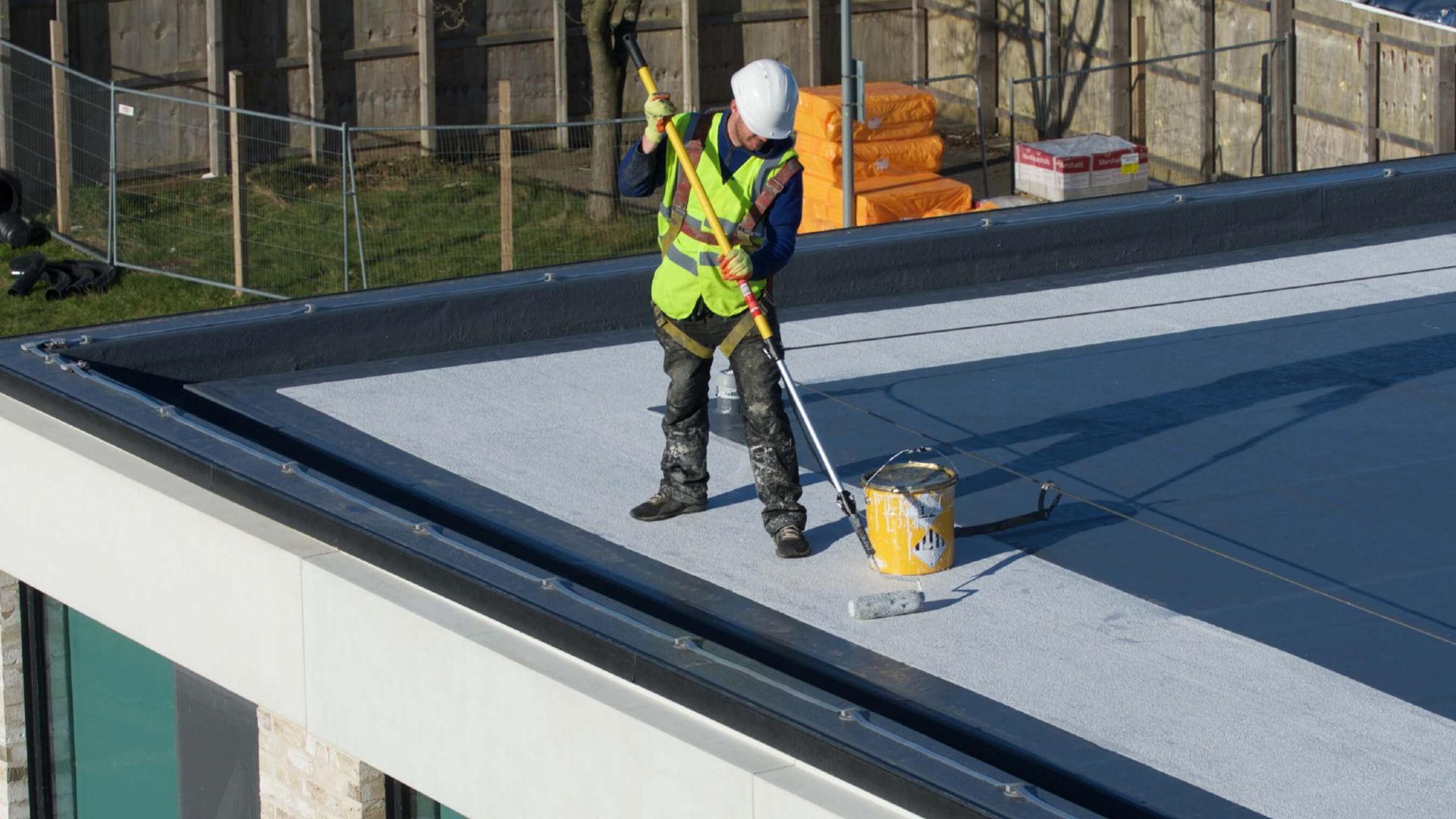
Triflex offers a range of cold-applied liquid waterproofing systems based on advanced Polymethyl Methacrylate (PMMA) polymer resins. These systems are applied as a liquid and cure rapidly to form a seamless, joint-free, and highly durable waterproof membrane. Key product lines include Triflex ProTect for roofs, Triflex ProDetail for complex details and junctions, and Triflex BTS-P for balconies and walkways. The systems are typically fleece-reinforced, ensuring robust and reliable waterproofing even on complex shapes and upstands. Vanguard specifies Triflex systems for their proven track record, versatility, and the confidence that comes from working with one of Europe's leading liquid waterproofing manufacturers.
Key Benefits
Cold-Applied
Eliminates hot-work risks, making it ideal for occupied buildings and sensitive environments.
Rapid Curing
PMMA-based systems are rainproof in approximately 30 minutes and fully cured in under an hour.
Seamless & Flexible
Creates a monolithic membrane with no joints or seams — common points of failure in traditional systems.
Weather Resistant
Highly resistant to UV radiation, chemicals, hydrolysis, and extreme temperature fluctuations.
Versatile Adhesion
Bonds securely to concrete, asphalt, metal, and most existing roofing membranes, often without primer.
Root & Rhizome Resistant
Certified resistant to root penetration, making it suitable for green roof and planter applications.
Typical Applications
- Flat roofs — warm roofs, inverted roofs, and green roof systems
- Balconies, walkways, and terraces with anti-slip finishes
- Multi-storey car park decks, ramps, and access roads
- Complex architectural details — skylights, vents, pipes, and penetrations
- Refurbishment of existing failed waterproofing membranes
- Podium decks and roof gardens
Common Questions About Triflex Liquid Waterproofing
Honest answers to the questions our clients actually ask.
How long does a Triflex system actually last?
Triflex PMMA systems are independently tested and BBA-certified with an expected service life of 25+ years. In practice, well-maintained installations from the 1990s are still performing. The key factor is correct specification and professional installation — which is exactly what Vanguard ensures.
Is Triflex more expensive than traditional felt or single-ply?
On a like-for-like installed cost basis, Triflex typically costs more upfront than basic felt systems but is comparable to quality single-ply. However, when you factor in the longer lifespan, lower maintenance costs, and virtually zero joint failures, the lifetime cost is often significantly lower. We're happy to walk you through a comparison for your specific project.
Can Triflex be applied over my existing roof membrane?
In most cases, yes. One of Triflex's key advantages is its ability to bond to existing substrates — including bitumen, asphalt, concrete, metal, and many single-ply membranes — often without a primer. This avoids the cost and disruption of a full tear-off. However, we always conduct a proper adhesion test first to confirm compatibility.
What happens if the liquid membrane gets damaged?
PMMA systems are straightforward to repair. A damaged area can be cut back, re-primed if needed, and a new layer of resin applied which chemically bonds to the existing membrane. The repair is seamless and maintains the waterproofing integrity. This repairability is a significant advantage over systems that require patch welding or full panel replacement.
Can you apply Triflex in cold or wet weather?
Triflex PMMA resins can be applied at temperatures down to 0°C and cure even in damp conditions — though we don't apply in standing water or rain. This gives a much wider working window compared to hot-applied bitumen or torch-on systems, particularly useful for UK weather conditions.