
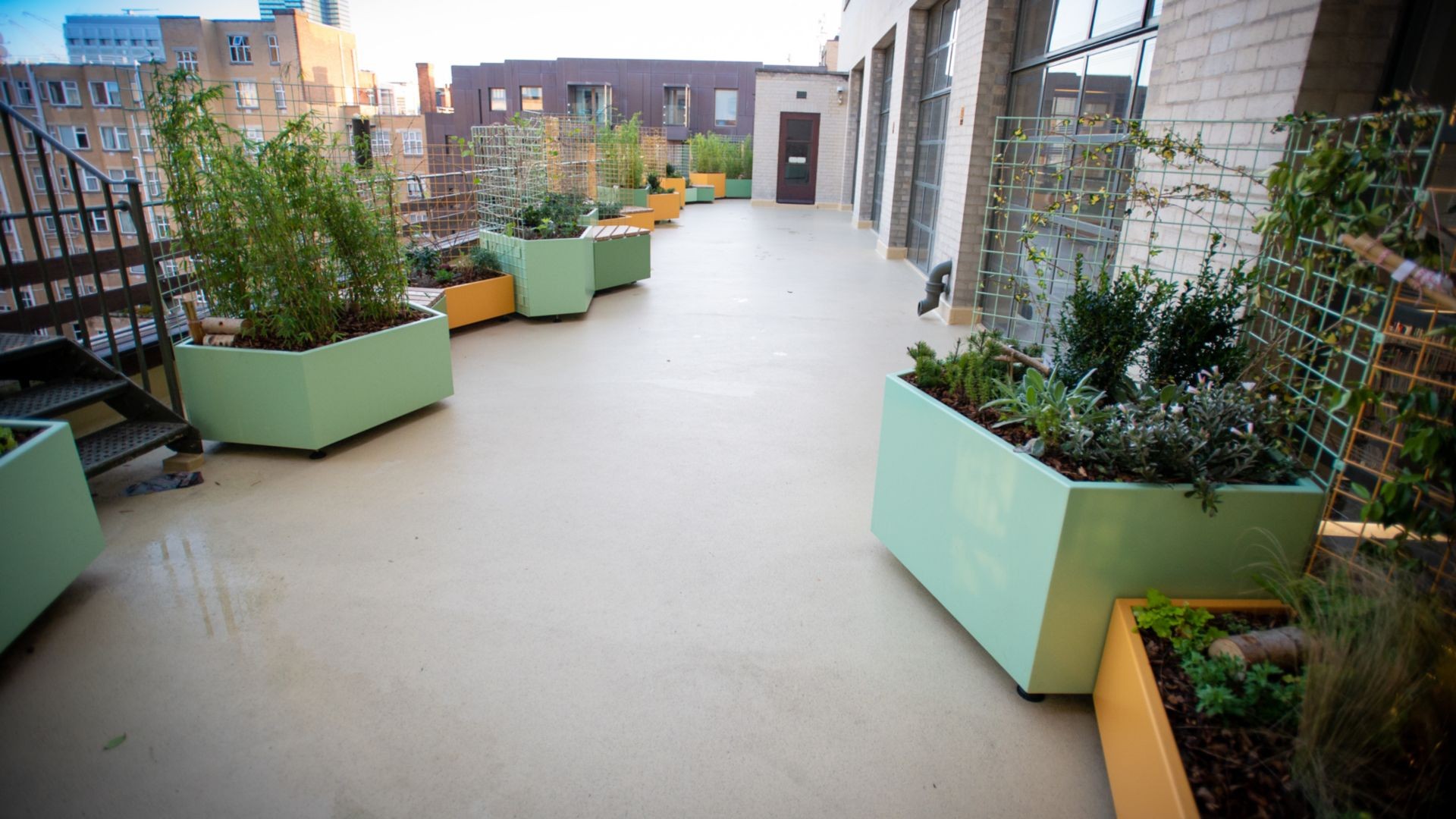
Roof Terrace & Balcony Waterproofing
Your Roof Terrace Is Leaking Into the Floor Below. Here’s How We Stop It — Permanently.
Every year, thousands of UK building owners discover that their "waterproof" terrace isn't. We install seamless liquid membranes that wrap every detail — so the flat below stays dry.
Why Most Roof Terraces Leak Within 10 Years
Roof terraces are one of the most failure-prone areas of any building. Unlike a standard flat roof, a terrace has pedestrian traffic, door thresholds, balustrade fixings, planters, and drainage — each one a potential point of failure.
Traditional sheet membranes rely on heat-welded or adhesive laps at every junction. Over time, thermal movement, foot traffic, and UV exposure work those joints apart. Water finds a way in — and by the time you see the stain on the ceiling below, it's been tracking across the deck for months.
The solution is a waterproofing system with no joints to fail. That's exactly what we install.
Common Terrace Failures We See
- Door threshold leaks — the single most common failure point
- Lapped membrane joints splitting under thermal movement
- Balustrade post penetrations losing their seal
- Drainage outlets blocked or poorly detailed
- Paving slabs hiding ponding water and membrane damage
- Planter boxes trapping moisture against upstands
How We Fix It
Triflex PMMA liquid waterproofing — specified and installed by Vanguard.
Seamless Protection
No joints, no seams, no weak points. Liquid-applied membranes wrap every upstand, threshold, and drain — creating one continuous waterproof barrier.
25+ Year Guarantees
BBA-certified Triflex PMMA systems with independently verified service lives exceeding 25 years. Not a promise — a proven track record.
Anti-Slip Finishes
Purpose-designed aggregate finishes that meet BS 7976-2 slip resistance standards — critical for balconies and communal terraces.
Over Existing Substrates
In most cases we apply directly over your existing waterproofing. No costly tear-off, no structural disruption, no skips on the street.
Green Roof Compatible
Root-resistant membranes certified to EN 13948 — ideal for podium gardens, planter boxes, and living roof build-ups.
Complex Details Handled
Door thresholds, drainage outlets, balustrade posts, expansion joints — we waterproof the details that catch everyone else out.
Where We Work
They Ask. We Answer.
My terrace was only done five years ago and it’s already leaking. Why?
Almost always it’s a detail failure — around a door threshold, a drainage outlet, or where the membrane meets an upstand. Sheet membranes rely on lapped joints at every one of these points. Liquid-applied systems don’t. That’s why we specify Triflex PMMA — it wraps every detail as one continuous membrane with zero joints to fail.
Do you have to rip up the entire terrace to fix it?
Rarely. In most cases we can apply the new waterproofing system directly over the existing membrane and build-up. We’ll survey the deck, test adhesion, and give you an honest assessment. If a tear-off genuinely is needed, we’ll tell you why — but it’s the exception, not the rule.
Can you waterproof a terrace while the building is occupied?
Yes. Triflex systems are cold-applied — no naked flames, no hot bitumen fumes, no fire risk. They’re rainproof in 30 minutes and trafficable the same day. We regularly work on occupied residential blocks, hotels, and commercial buildings.
What does roof terrace waterproofing actually cost?
Typically £80–£150 per m² for a Triflex PMMA system with anti-slip finish, depending on complexity, access, and substrate condition. A 50m² residential terrace might cost £5,000–£8,000 installed. We’ll give you a fixed-price quote after survey — no surprises.
What about the paving or decking on top?
We waterproof the structural deck beneath. Paving slabs, timber decking, or pedestal systems sit on top of the membrane. We can advise on the best build-up for your situation and work with your landscaper or contractor to coordinate the finishes.